Zinc chromate plating is one of the most common surface treatments used to protect spring steel from rust and wear. If you’re specifying a custom spring for an automotive assembly, an aerospace bracket, or a piece of industrial equipment, you’ve likely run into the question of which finish will keep your part performing over its full service life. This article breaks down how zinc chromate electro-plating works, why it’s applied to springs, and what you should know before you choose it for your next project.
What Is Zinc Chromate Plating?
What Is Zinc Chromate Plating?
Zinc chromate plating is a two-step surface treatment. First, a thin layer of zinc is applied to a metal part using an electroplating process. Then a chromate conversion coating is applied over the zinc plate. The chromate layer reacts chemically with the zinc coating to form a protective barrier that boosts corrosion resistance well beyond what a plain zinc coating provides on its own.
Springs made from carbon steel or high-strength steels corrode when they’re exposed to moisture, salt, or humidity over time. A layer of zinc acts as a sacrificial anode: it corrodes before the underlying steel does, protecting the base metal beneath it. When you add a chromate conversion coating on top, you get a level of corrosion protection that holds up in harsh environments, from coastal automotive applications to outdoor industrial equipment.
The Process
How Electroplating Works
Zinc chromate plating follows a clear sequence of steps, each one affecting how well the final coating performs. From surface prep to the chromate conversion coating, every stage plays a part in the strength, adhesion, and corrosion resistance of the finished spring. Here’s how the plating process comes together from start to finish.
Preparing the Metal Surface
Before any spring goes into the plating bath, the metal surface has to be cleaned and prepared. Manufacturers pickle the parts to remove oxidation, oils, and other residue that would prevent proper adhesion. This step matters just as much as the plating itself. Zinc that’s applied over a dirty or oxidized metal surface won’t bond correctly, and the finish will fail early.
Applying the Zinc Coating
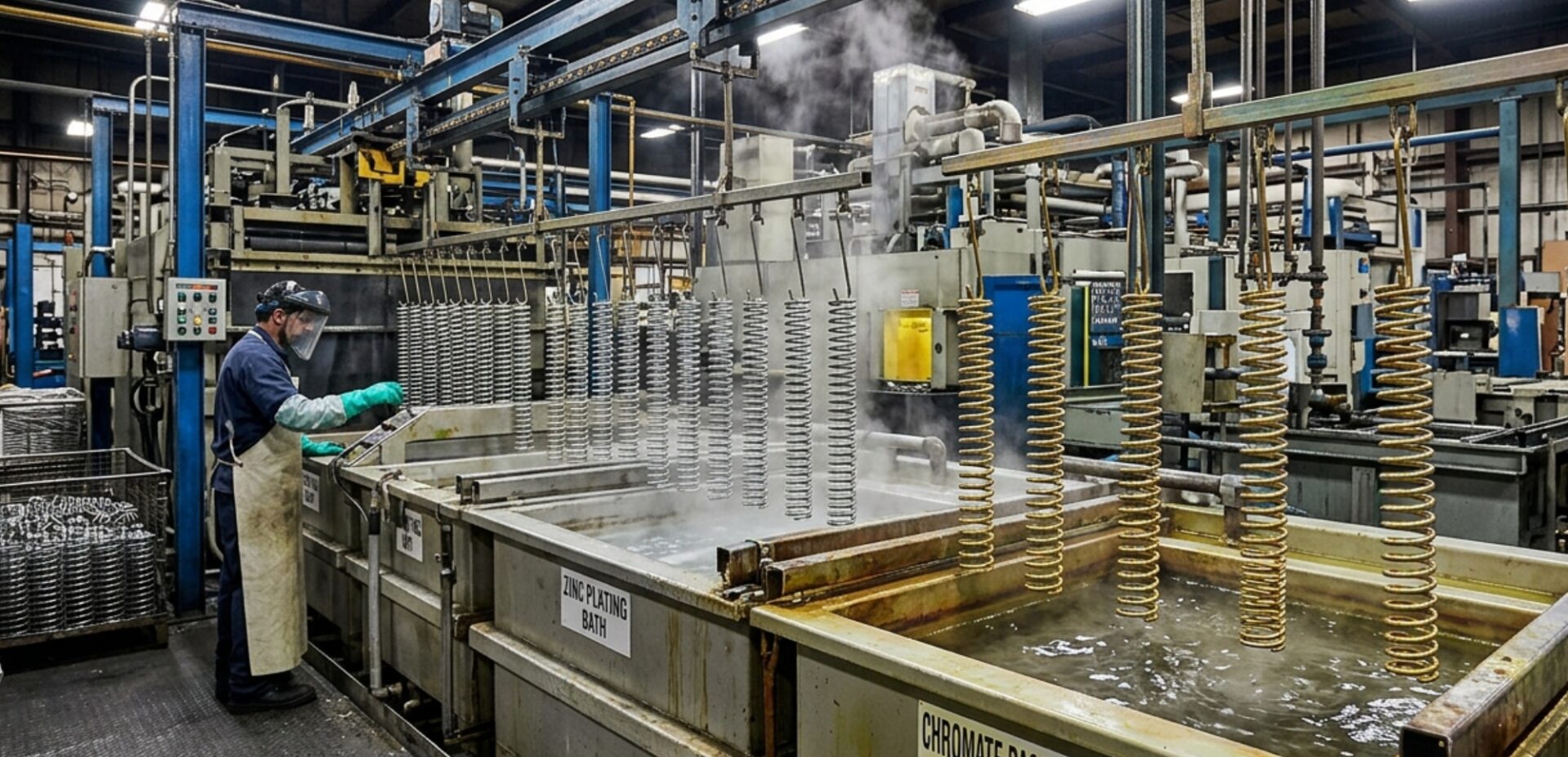
Once the springs are clean, they go into an electrolyte plating solution containing zinc ions. An electric current is passed through the bath, and the zinc ions migrate to the surface of the part, forming a thin coating of zinc across the entire spring. This is the electroplating process at the core of zinc plating: electric current, a conductive plating solution, and a controlled chemical reaction that deposits zinc evenly across every coil.
Plating thickness is controlled carefully during this stage. Too thin a coating won’t provide adequate wear resistance or corrosion protection. Too thick a coating can interfere with spring tolerances, particularly on precision compression springs where dimensional accuracy affects performance.
Adding the Chromate Conversion Coating
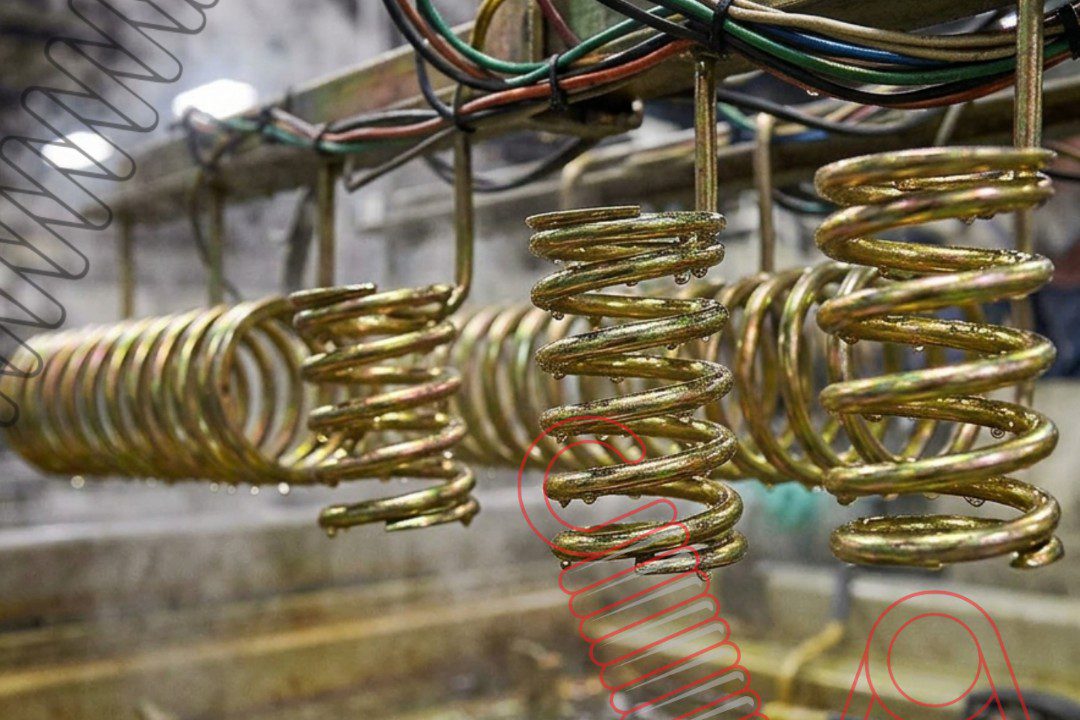
After the zinc plate is applied, the spring goes through a chromate conversion step. This treatment reacts with the zinc coating to create chromate conversion coatings that add an extra layer of corrosion resistance, improve adhesion for any post-plating treatments, and give the part a distinct appearance, ranging from a clear finish to a shiny finish, depending on the chromate type used.
Some parts are baked after plating to reduce the risk of hydrogen embrittlement, a condition that can weaken high-strength steels during the electroplating process. This step is especially important for springs, since hydrogen embrittlement can cause premature cracking under the repeated flexing and load cycles springs are built for.

The Benefits
Why Zinc Chromate Plating Matters for Springs
Springs face constant stress, movement, and exposure, so the finish you choose can make a big impact on how long a part lasts. Zinc chromate plating gives spring steel several performance benefits beyond a basic protective layer. Here’s what this finish brings to the table.
Corrosion Resistance and Longevity
Springs are often installed in places that are hard to reach and harder to inspect on a regular basis. A spring buried inside an automotive suspension system or an industrial assembly needs a finish that can protect it for years without maintenance. Zinc chromate plating gives spring steel that extended protection by combining the sacrificial properties of zinc with the added corrosion resistance of the chromate layer.
Manufacturers test this performance using salt spray testing, an ASTM-standard method that exposes plated parts to a salt fog environment to measure how long the coating holds up before signs of corrosion appear. Springs that pass extended salt spray testing are well suited for automotive, agricultural, and marine-adjacent applications where exposure to moisture and road salt is common.
Wear Resistance and Hardness
Beyond corrosion protection, zinc plating adds a measure of wear resistance to the spring surface. The added hardness of the plated layer helps protect against surface wear from repeated contact or friction, extending the life of the part in demanding mechanical applications.
Improved Appearance and Conductivity
Zinc chromate plating also improves the appearance of a spring, giving metal parts a consistent, smooth surface and a uniform look across a full production run. For electrical components, zinc plating can support conductivity requirements, and it’s frequently specified for parts that need reliable solderability during assembly.

Finish Comparison
Zinc Plating vs. Other Surface Treatments
Zinc isn’t the only metal finishing option available for springs. Nickel plating, electroless nickel, and chrome plating are alternatives that offer their own combinations of hardness, appearance, and corrosion resistance. Cadmium plating was historically common in aerospace and defense applications, though it’s used less today due to environmental and handling restrictions.
Compared to these options, zinc plating tends to be a cost-effective choice for general-purpose corrosion protection on carbon steel and sheet metal parts. Nickel and chrome plating are typically reserved for applications where wear resistance, hardness, or a specific aesthetic finish is the top priority.
Plating is often applied after other treatment steps. Heat treating is commonly performed before plating, since it sets the mechanical properties of the spring before any surface treatment is added. Getting the sequence right matters. Plating over a spring that hasn’t been properly heat treated can trap stresses in the material and shorten its service life.
Real-World Uses
Common Applications of Zinc Plating on Springs
Common applications of zinc plated springs span a wide range of industries:
- Automotive components, including suspension springs, seating mechanisms, and fasteners exposed to road conditions
- Aerospace assemblies where weight, reliability, and corrosion protection all matter
- Medical devices requiring a clean, corrosion-resistant metal surface
- Industrial equipment operating in humid or chemically exposed environments
- Agricultural machinery exposed to outdoor conditions year-round
Base material selection plays a role in how well a spring plates. Music wire is a common substrate for plated spring components, prized for its high tensile strength and consistent surface quality, both of which support strong zinc adhesion during the plating process.

Making the Right Choice
Choosing the Right Finish for Your Spring Design
Every spring design comes with its own set of requirements: load, cycle life, environment, and industry standards all play a role. Zinc chromate plating offers a strong combination of corrosion resistance, wear resistance, and cost efficiency for springs used across automotive, industrial, agricultural, and medical applications. For parts headed to more specialized environments, such as aerospace or high-humidity settings, supplementary treatments or an alternative finish like nickel or chrome plating may be a better fit.
Our team at Western Spring works with engineers to match the right finish to the right application, factoring in the base material, the operating environment, and the performance standards your project needs to meet.
Next Steps
Get Started on Your Next Plated Spring Project
Western Spring Manufacturing has built custom springs and wire forms for four generations, backed by ISO 9001:2015 certification and membership in the Spring Manufacturers Institute. Whether you need a zinc chromate finish on a compression spring, a torsion spring, or a custom wire form, our team can help you spec the right material, treatment, and plating process for your application.
Reach out to our team today to talk through your spring design and finishing needs, and we will help you build a part that is ready to perform in the field.