Powder coating is a popular finishing option for custom springs that need a tough, durable finish beyond what paint or plating alone can provide. If you’re looking for a way to protect your springs from rust while also giving them a specific look, powder coat is worth considering for your next project.
Powder coat is a dry finishing process that applies a fine powder, usually a polyester or epoxy blend, to the surface of a metal part. Unlike liquid paint, powder coat doesn’t use a solvent to carry the coating onto the part. Instead, the powder is applied electrostatically and then cured under heat, forming a hard, even layer across the entire spring. This process gives powder coated springs a thicker, more durable finish than standard paint, along with better resistance to chipping, fading, and rust.
The Process
How Springs Are Powder Coated
Getting a properly powder coated spring takes several steps, and each one plays a role in how well the finish holds up over time. From surface prep to the final cure, the process is built to give springs a coat that bonds tightly to the metal.
Surface Preparation
Before any powder is applied, springs go through a cleaning step to remove oils, dirt, and any oxidation on the part. Many manufacturers use a phosphate treatment at this stage. A phosphate coating helps the powder adhere properly to the spring while also adding a layer of rust protection beneath the powder coat itself. Skipping this step or using an improper phosphate process can lead to a powder coat that doesn’t bond well, which shortens the life of the finish.
Applying the Powder
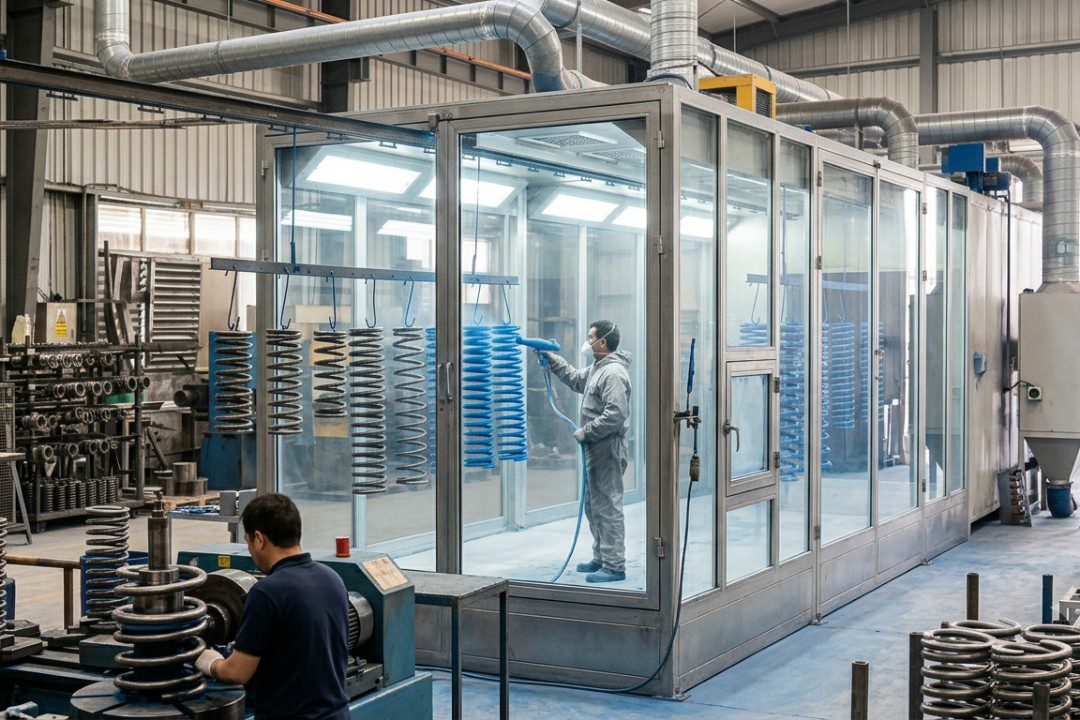
Once the spring is clean and prepped, the powder is applied using an electrostatic spray gun. The gun gives each powder particle a positive charge, and the grounded spring attracts the powder evenly across its surface, including tight coils and hard-to-reach areas. This step is what makes powder coat such an efficient use of material, since the electrostatic charge helps the powder stick where it’s needed and reduces waste compared to liquid paint.
Curing the Coat
After the powder is applied, the spring goes into an oven and is cured at a controlled temperature. This heat causes the powder to melt and flow together, forming a smooth, continuous coat across the entire part. The temperature and cure time both affect the final strength and appearance of the coat, so this step is closely controlled to make sure every spring meets the same standard.
Why Choose Powder Coating
Benefits of Powder Coating for Springs
Powder coat brings several advantages to custom springs beyond a good-looking finish. These benefits are part of why powder coating has become a go-to option for springs used in demanding environments.
Rust and Corrosion Protection
One of the biggest reasons manufacturers choose powder coating is rust protection. A properly applied powder coat forms a tough barrier between the metal part and the surrounding environment, helping keep moisture and contaminants away from the spring surface. Combined with a phosphate pretreatment, powder coat offers strong, long-lasting protection against rust, even in tough outdoor or industrial conditions.
Durability and Strength
Powder coating is known for being more durable than standard paint. Because the coat is cured under heat rather than air-dried, it forms a harder, more chip-resistant layer that can handle the physical stress springs go through during regular use. This added strength makes powder coating a strong choice for springs used in high-cycle applications like extension springs, where the coating needs to hold up to repeated flexing without cracking or peeling.
Cost Considerations
Powder coating can offer a strong balance of cost and performance compared to other finishing options. The process of powder coating tends to use less material than paint, since oversprayed powder can often be collected and reused. For manufacturers producing springs in volume, this can help keep the overall cost of finishing down while still delivering a tough, long-lasting coat on every part.
Custom Color Options
Custom Color Spring Coating
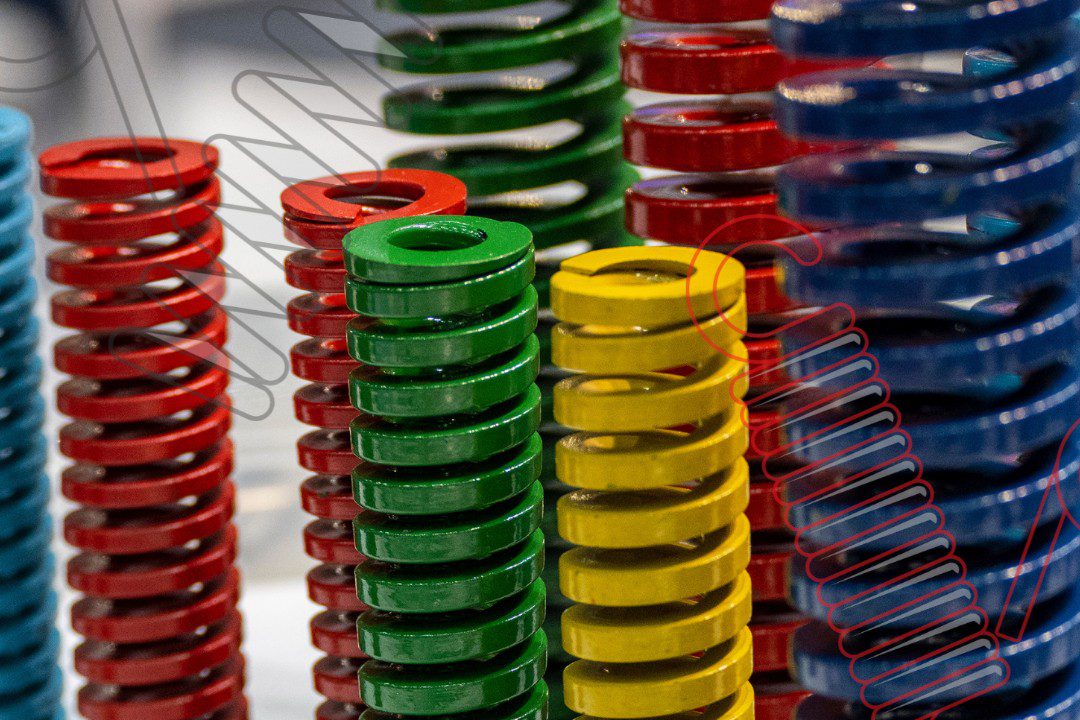
Custom color spring coating is one of the standout advantages of powder coating compared to plating or bare metal finishes. Powder coating is available in a wide range of colors, so springs can be finished to match a specific brand standard, safety requirement, or aesthetic preference.
Custom color spring coating gives manufacturers flexibility that other finishes can’t easily match. Whether a component needs to be color-coded for identification on an assembly line or finished to match the surrounding hardware, powder coating can be mixed and applied in nearly any color needed. This makes it a popular option for automotive parts, where color coding and brand consistency often matter as much as performance.
Where Powder Coated Springs Are Used
Common Applications for Powder Coating
Powder coated springs show up across a wide range of industries and applications where rust protection, durability, and appearance all matter.
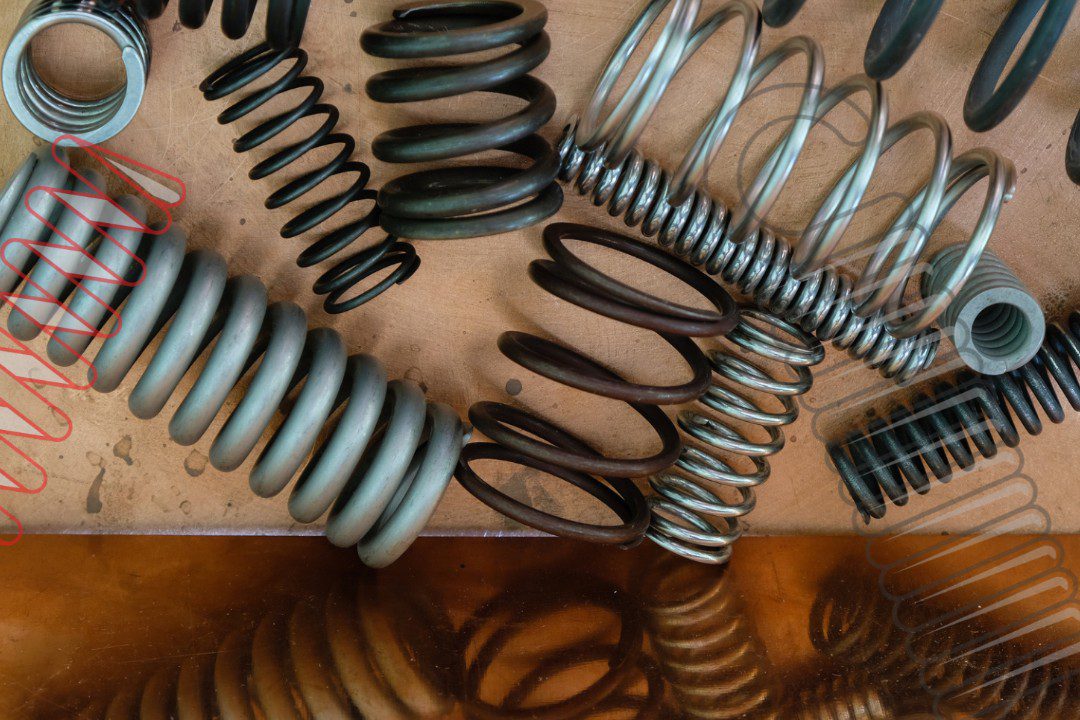
Industrial equipment, automotive components, and outdoor hardware all benefit from the tough, rust-resistant properties of powder coating. Springs used in exposed or high-humidity environments hold up better over time with a powder coat finish compared to bare metal or standard paint. Powder coating is also a common choice for parts where a custom color is needed for branding, safety, or identification purposes.
Before a powder coat is applied, some springs go through vibratory finishing to smooth the part surface and remove any burrs left over from forming. This extra step can help the powder coat go on more evenly, giving the finished spring a cleaner, more consistent look.
Powder Coating vs Other Finishing Options
Comparing Powder Coating to Paint and Plating
Powder coating isn’t the only finishing option available for custom springs, and it’s worth understanding how it stacks up against other choices.
Liquid paint is generally less expensive upfront but doesn’t offer the same durability or rust resistance as powder coating, and it can chip or fade more easily over time. Plating options like zinc or nickel offer strong corrosion resistance but don’t provide the same color flexibility that powder coating does. For springs that need a specific color along with a tough, rust-resistant finish, powder coating often ends up being the more practical choice, even when the upfront cost is a bit higher than paint.
Next Steps
Partner with Western Spring for Powder Coated Springs
Western Spring has the experience to help you spec the right finish for your custom spring project, whether that’s powder coat, plating, or another treatment entirely. As a fourth-generation, family-owned manufacturer with ISO 9001:2015 certification, we can help you find a coat that matches your performance needs, budget, and color requirements.
Reach out to our team today to talk through your powder coating project, and we’ll help you build a spring that’s ready to perform and look the part.