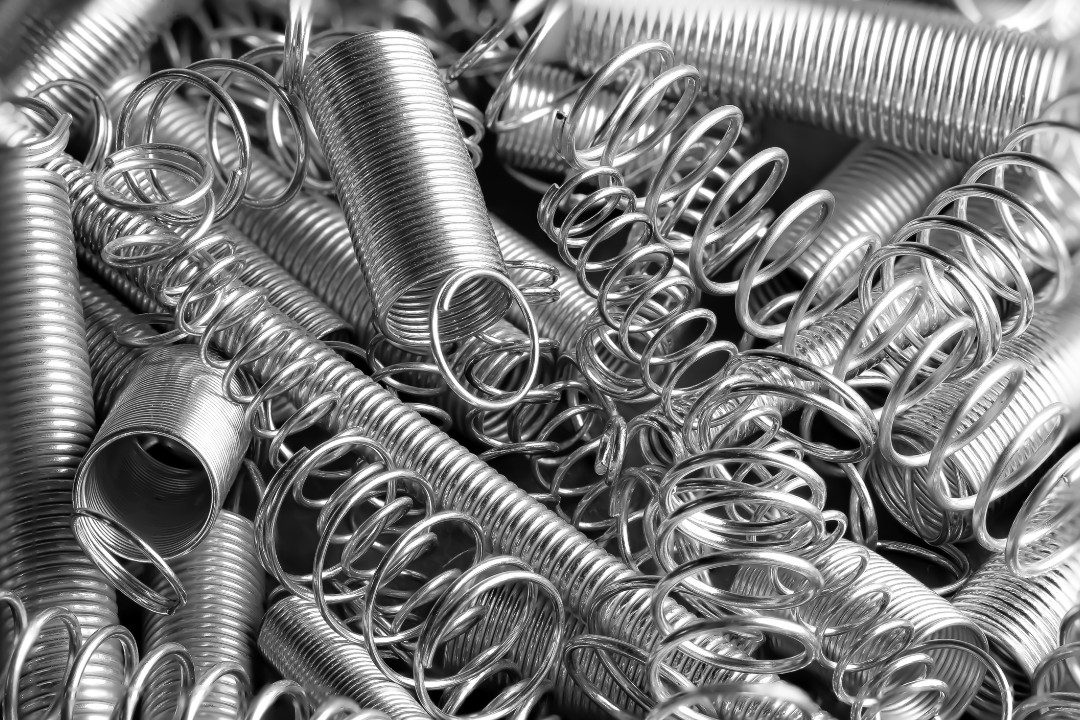
Electropolishing is one of the most effective finishing processes available for stainless steel (SS) springs. If your application calls for a smooth, defect-free surface finish, whether it’s for medical devices, aerospace hardware, or general industrial use, electropolishing offers a level of precision that mechanical polishing methods can’t always match. This article covers how electropolishing works, what it does for SS spring surface finishing, and why it’s a common choice for medical grade spring polishing.
The Basics
What Is Electropolishing?
Electropolishing is an electrochemical process that removes a thin layer of material from the surface of a metal part to improve its surface finish. Unlike mechanical polishing, which relies on abrasion to smooth a part surface, electropolishing uses an electrical current and a chemical electrolyte, often a phosphoric-based solution, to dissolve microscopic surface material and leave behind a smooth, highly reflective finish.
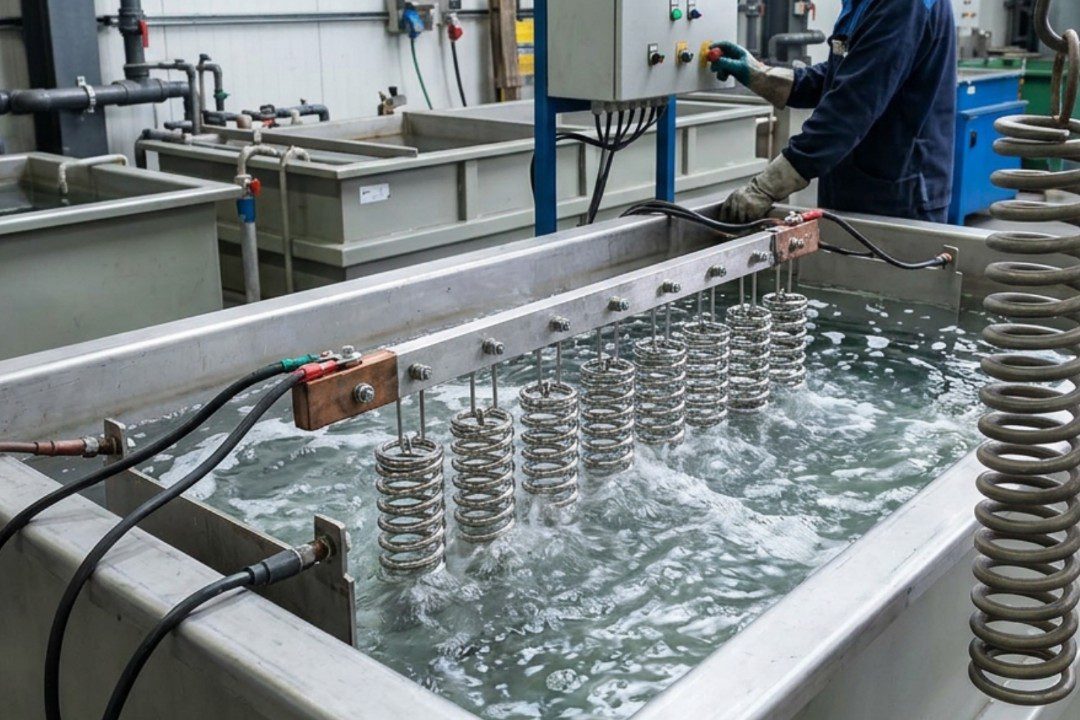
During the electropolishing process, the spring or wire form acts as the anode in an electrochemical cell. An electrical current passes through the electrolyte, and material is removed from the surface through a controlled process called anodic dissolution. This selectively removes high points on the metal surface, smoothing out microscopic defects, burrs, and surface anomalies left behind by machining, coiling, or forming.
The Process
How the Electropolishing Process Works
Electropolishing a stainless steel spring involves a few careful steps to make sure the finished part meets the surface finish and dimensional requirements of the application. Getting each step right matters, especially for parts headed to demanding industries like medical or aerospace.
Preparing the Spring for Electropolishing
Before electropolishing begins, springs are cleaned to remove oils, contaminants, and any oxide scale left over from prior manufacturing steps like casting or heat treatment. Parts are then loaded onto a rack and submerged in the electrolyte bath.
Applying Electrical Current
Once submerged, an electrical current is applied at a controlled current density. This drives the anodic reaction that removes surface material from the stainless steel. The rate of material removal depends on the alloy composition, current density, and how long the part stays in the bath. This step is what separates true electropolishing from other metal finishing methods, since the process removes material at a microscopic level rather than simply buffing or coating the surface.
Rinsing and Passivation
After electropolishing, parts are rinsed to remove any residual electrolyte. This step often supports passivation, a related process that further boosts corrosion resistance by promoting the formation of a stable, protective oxide layer on the stainless steel surface. Passivation and electropolishing work well together, since electropolishing removes surface defects that could otherwise trap contaminants and interfere with passivation.
The Benefits
Benefits of Electropolishing for Stainless Steel Springs
Electropolishing offers several advantages for stainless steel springs beyond a clean, attractive surface finish. These benefits make it a preferred metal finishing option for coil springs, torsion and flat springs, and other custom wire forms.
Improved Corrosion Resistance
Electropolishing improves corrosion resistance by removing the outer layer of the metal surface where contaminants, inclusions, and oxide can collect. This is especially valuable for stainless steel alloys, since electropolishing helps restore the chromium-rich passive layer that gives stainless steel its corrosion-resistant properties. Removing heat tint left behind from welding or heat treatment also helps prevent localized corrosion at those spots.
Extended Fatigue Life
Cracks and other microscopic defects on a part surface can act as starting points for stress fractures under repeated load cycles. Electropolishing smooths these surface defects, which helps extend the fatigue life of springs used in high-cycle applications. This makes it a valuable finishing process for compression springs and other parts subject to constant flexing, since surface-level flaws removed by electropolishing reduce the risk of premature part failure.
Defect-Free, Deburring Results
Electropolishing also works as an effective deburring method, removing sharp edges and burrs left behind from machining or coiling without the need for additional tumble finishing or mechanical polishing. Because the process is uniform and doesn’t rely on physical contact, it can reach tight coils and complex wire form geometries that other polishing methods can’t easily access.
Why It Matters for Medical Applications
SS Spring Surface Finishing for Medical Grade Applications
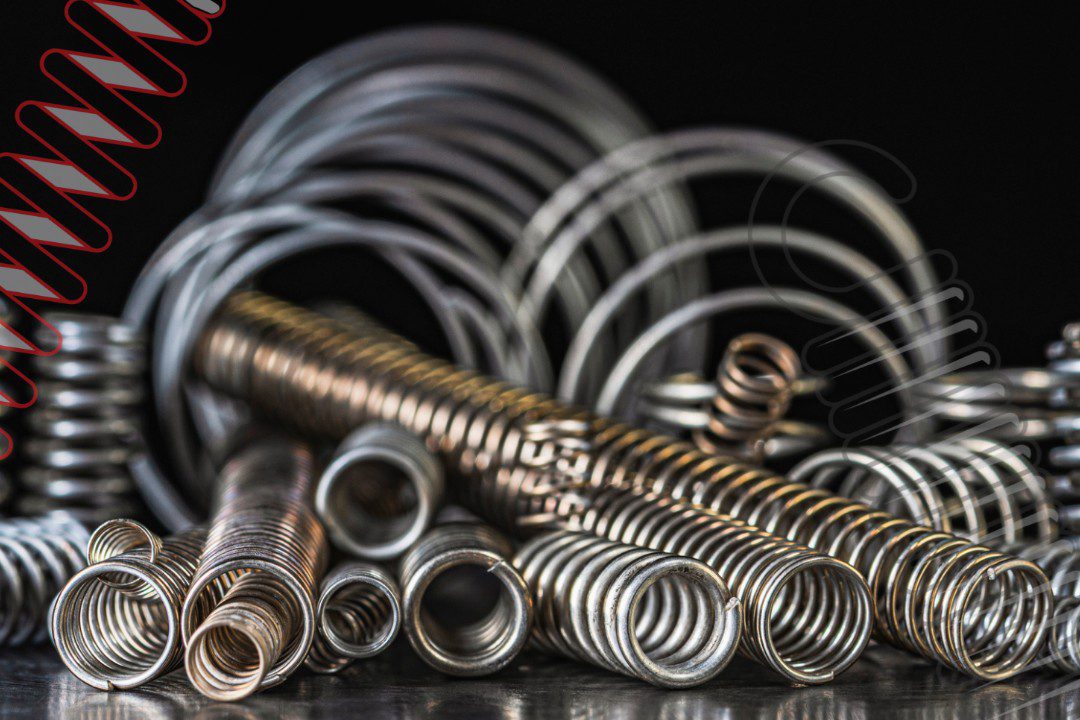
Medical grade spring polishing has some of the strictest surface finish requirements of any industry, and electropolishing is often the finishing process of choice for stainless steel springs and wire forms used in medical devices.
Meeting Medical Grade Spring Polishing Standards
Medical devices need parts that are free of surface defects, contaminants, and sharp edges that could compromise performance or patient safety. Electropolishing produces a smooth, defect-free surface that’s easier to clean and sterilize, which matters for springs used in surgical tools, implantable devices, and diagnostic equipment. Alloys like nitinol and various grades of stainless steel, including 302, 304, and 17-7, respond well to electropolishing and are common choices for medical spring applications.
Our medical coils are engineered with these standards in mind, and electropolishing is one of several finishing options we offer to meet the precision and cleanliness requirements of the medical industry.
Applications Beyond Medical
Where Else Electropolishing Is Used
While medical grade spring polishing is a major driver for electropolishing, the process is used across other industries as well. Aerospace applications often call for electropolished stainless steel parts to reduce weight while maintaining strength and corrosion resistance. Semiconductor manufacturing relies on electropolishing to produce ultra-clean surfaces free of contaminants that could interfere with sensitive processes. General industrial applications also benefit from the improved wear resistance and appearance electropolished parts provide.
Choosing Electropolishing for Your Spring Project
Is Electropolishing Right for Your Application?
Electropolishing is a strong choice when your project calls for a defect-free surface finish, improved corrosion resistance, or extended fatigue life on stainless steel springs. It’s particularly well suited to medical, aerospace, and other high-precision applications where surface quality directly affects part performance. For a deeper look at how electropolishing compares to other spring and wire form treatments, check out our full guide on electropolishing.
Not every spring needs electropolishing, and our team can help you determine whether it’s the right fit based on your alloy, application, and performance requirements, or whether another finishing process makes more sense.
Next Steps
Partner with Western Spring for Electropolishing Services
Western Spring has the experience and equipment to provide electropolishing services for stainless steel springs and custom wire forms across a wide range of industries. Backed by ISO 9001:2015 certification and four generations of manufacturing expertise, our team can help you spec the right alloy, finish, and process for your application.
Reach out to our team today to talk through your spring project, and we’ll help you find the finishing solution that fits your needs.