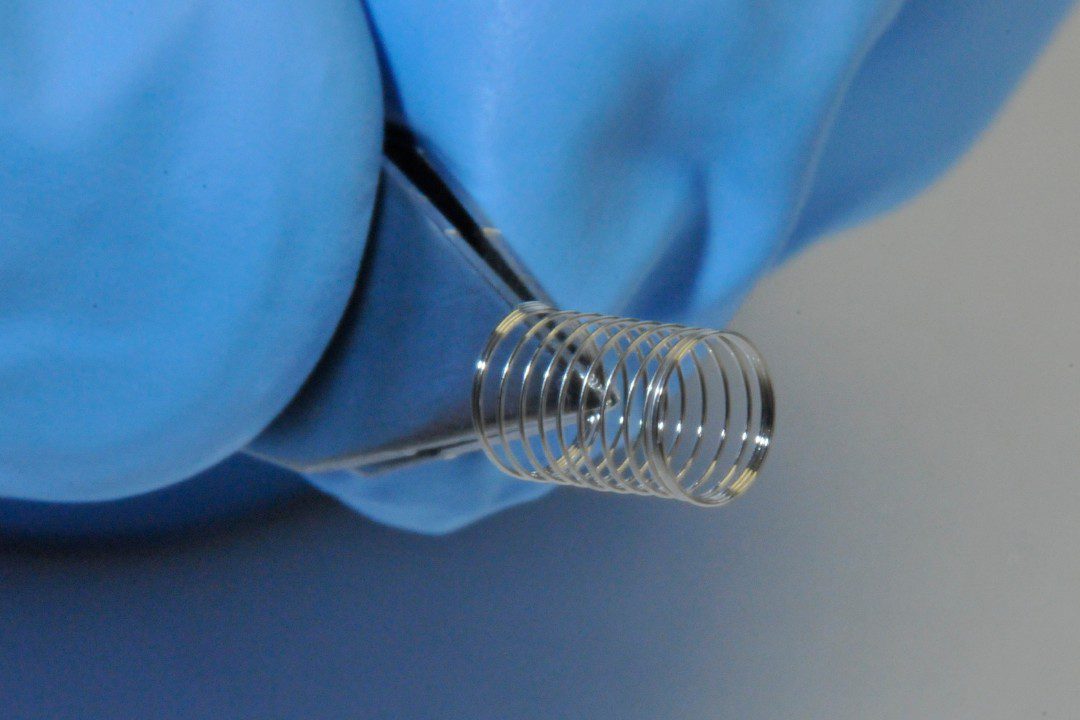
Springs are critical components in the medical industry. From surgical instruments to diagnostic equipment, springs in medical devices must perform with absolute reliability under conditions that standard industrial springs aren’t built to handle.
Many medical devices depend on springs to deliver controlled force, maintain consistent tension, or trigger precise mechanical responses. A spring failure in a consumer product is an inconvenience, but a spring failure in a medical device can put patients at risk. That distinction shapes every decision made during medical spring manufacturing, from the wire selected to the testing methods applied before a spring ever reaches a device.
At Western Spring Manufacturing, we specialize in custom springs for medical devices, bringing four generations of spring manufacturing expertise to one of the most demanding industries.
THE HIGH STAKES OF MEDICAL SPRING MANUFACTURING
The Regulatory Landscape: Precision and Reliability
FDA Requirements for Medical Device Components
Springs used in medical devices that are sold in the United States fall under FDA oversight as components of regulated medical devices. Manufacturers must demonstrate that every component, including springs, meets the design, material, and performance specifications documented during the device development process.
FDA Design Controls under 21 CFR Part 820, require medical device manufacturers to maintain design controls, production records, and corrective action procedures that trace back to individual components. This means the spring manufacturer must provide full traceability of materials and dimensional records for each production run.
ISO 9001:2015 Medical Springs and Quality Standards
Western Spring holds ISO 9001:2015 certification, which establishes the foundation for quality management across all of our manufacturing operations. For medical springs specifically, ISO 9001:2015 provides the framework for consistent process control, supplier verification, and nonconformance handling.
Medical device manufacturers often require their spring suppliers to certify compliance with ISO 9001:2015 as a baseline condition for qualification. Beyond that baseline, some applications require compliance with ISO 13485, the quality management standard written specifically for medical device supply chains. Our quality infrastructure is built to support both standards.

PRECISION THAT CAN’T BE COMPROMISED
Medical Device Spring Specifications
Dimensional Tolerances and Wire Size
Medical device spring specifications go well beyond what standard industrial springs require. Wire size tolerances, free length tolerances, and coil diameter tolerances are all held to tighter ranges to ensure the spring performs as designed once assembled into the device.
In many medical devices, the available space for a spring is measured in millimeters, and a deviation of even a fraction of a millimeter can prevent proper assembly or change the force output of the mechanism. Precision in every dimension isn’t optional. It’s the baseline expectation.
Springs used in surgical instruments must also account for repeated sterilization cycles, which can affect material properties over time. Dimensional stability under thermal and chemical stress is factored into the specification from the beginning of the design process.
Spring Testing Standards for Medical Devices
Every medical spring we produce undergoes verification testing using computerized force/length testers that confirm spring parameters against the documented specification. This level of testing is part of what separates a qualified medical spring manufacturer from a general industrial supplier.
Spring testing standards for medical devices typically require load testing at defined lengths, cycle fatigue testing for springs used in repetitive mechanisms, and dimensional inspection to confirm wire size, outer diameter, free length, and total coils. Material certifications and test reports are retained as part of the quality record for traceability.
EXCEPTIONAL QUALITY & CLEANLINESS STANDARDS
Material Selection for Medical Device Springs
Choosing the Right Materials for the Application
Material selection for medical device springs is one of the most consequential decisions in the design process. The material must be compatible with the sterilization method used, resistant to corrosion from bodily fluids or cleaning agents, and capable of maintaining its mechanical properties over the expected service life.
Stainless steel, specifically 316L and 302/304, is the most common choice for springs in medical devices. These alloys offer excellent corrosion resistance, good spring properties, and compatibility with steam autoclave sterilization, ethylene oxide, and gamma radiation processes.
For implantable applications or contact with the human body, material selection becomes even more stringent. Nitinol and titanium are used in specialized applications where biocompatibility, flexibility, and memory characteristics are required. Choosing the right materials is not just a performance consideration. It’s a requirement for patient safety.
Coatings, Cleanliness, and Surface Integrity
Springs used in sterile medical devices must meet cleanliness standards that go beyond what is expected in standard manufacturing. Particulate contamination, surface oils, and processing residue must all be controlled and verified.
Some medical spring applications require passivation, electropolishing, or other surface treatments to improve corrosion resistance and reduce surface roughness. These treatments also improve cleanliness by removing embedded particles and surface contaminants introduced during the manufacturing process.
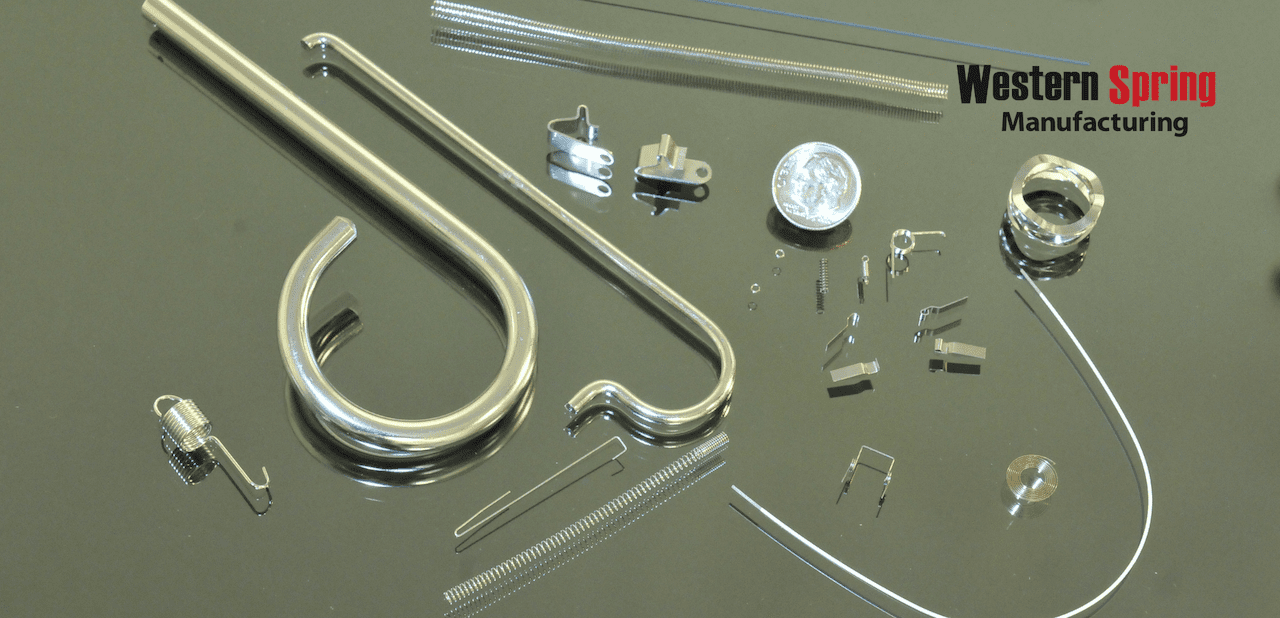
CATEGORIES FOR MEDICAL DEVICE DESIGNERS
Types of Springs Used in Medical Devices
Compression Springs in Medical Applications
Compression spring design for medical use appears across a wide range of devices. A compression spring is found in syringes, pill dispensers, drug infusers, and injector mechanisms where controlled linear force is required. The spring provides the force needed to advance a plunger, release a dose, or reset a trigger component.
Compression spring design for these applications must account for very specific force requirements across a defined deflection range. In many cases, the spring must deliver consistent force across thousands of actuation cycles without degradation.
Our compression spring manufacturing capabilities support the tight tolerances and material requirements that medical device applications demand.
Extension Springs in Precision Medical Equipment
Extension springs appear in medical equipment where tension, retraction, or return force is required. Bed lift mechanisms, retractors, and access panels in diagnostic equipment all rely on extension springs to provide controlled return motion.
For high-precision springs for medical applications, extension spring design must address the initial tension built into the coil, the hook geometry and stress concentration, and the force-deflection curve across the expected travel range.
Learn more about our extension spring capabilities and how we support custom design requirements.
Torsion Springs in Medical Mechanisms
Torsion springs appear in clamps, latches, hinges, and rotational mechanisms found throughout medical equipment. A spiral torsion spring may be used in a spring-loaded cover, a dispensing mechanism, or a ratchet component within a surgical instrument.
Torsion springs for medical use must be designed to deliver consistent torque at a defined angle, with geometry that fits within the spatial constraints of the device mechanism. Our engineering support team works with device manufacturers during the design phase to optimize torsion spring geometry for both performance and manufacturability.
See our torsion spring product page for an overview of our manufacturing capabilities.
Medical Coil Spring Requirements
Coils used in catheter systems, guidewires, and infusion devices must be manufactured with extremely tight pitch consistency, precise outer diameter control, and verified flexibility characteristics.
For catheter applications, the coil must navigate curves within the body without kinking or losing its structural integrity. Medical coil spring requirements in these cases go far beyond dimensional tolerances and extend into the functional performance of the coil under bending load conditions.
Our medical coil manufacturing capabilities are built to meet the precision and reliability that catheter and guidewire designers require.
Designing Springs for Surgical Instruments
What Surgeons Require from Spring Components
Designing springs for surgical instruments starts with understanding how the instrument is used in the operating room. A surgeon depends on the instrument to respond predictably, actuate smoothly, and reset without delay. The spring component inside that instrument is what makes that possible.
Springs used in surgical instruments must perform reliably under repeated sterilization, often hundreds of cycles over the instrument’s service life. They must maintain their force output within specification and resist fatigue cracking in stress concentration zones.
Surgical stapler mechanisms rely on precisely engineered springs to control jaw tension, firing force, and component reset. A surgical stapler with inconsistent spring performance creates unpredictable firing behavior, which is unacceptable in the operating room.
Engineering Support for Complex Spring Design
Western Spring provides engineering support during the design phase for custom springs used in surgical instruments and medical devices. Our team uses the latest spring design software to model force-deflection behavior, stress distribution, and fatigue life before production begins.
This front-end engineering support reduces the number of design iterations required and helps medical device engineers arrive at a validated spring specification faster. For complex mechanisms or novel device architectures, early collaboration between the device engineer and the spring manufacturer produces better outcomes than trying to adapt a standard spring to a new application.
Cleanroom Considerations for Medical Spring Manufacturing
Some medical device applications require springs that are packaged in controlled environments to prevent contamination prior to assembly. Cleanroom packaging and handling protocols ensure that springs arrive at the assembly facility in a condition that meets the device manufacturer’s incoming inspection requirements.
Springs provide mechanical function, but in medical devices they also become part of the sterility and cleanliness chain that protects the patient. For applications where post-manufacturing cleanliness is a specification requirement, we work with our customers to define and document the appropriate handling and packaging process.
Wire Forms in Medical Device Applications
Beyond coil springs, wire forms are used throughout medical devices as structural components, retaining clips, guides, and actuation linkages. Our wire forms manufacturing capabilities extend the same material and quality standards that apply to our springs into complex three-dimensional wire geometries.
For medical device designers who need both springs and wire form components within the same assembly, working with a single qualified supplier simplifies the qualification process and ensures consistent material and quality documentation.

COMPREHENSIVE CUSTOM DESIGN SUPPORT
Springs Are Critical: Why the Manufacturer You Choose Matters
Springs are critical components in medical devices that often receive little attention until something goes wrong. The manufacturing process, material traceability, testing documentation, and quality management infrastructure behind each spring all contribute to the reliability of the finished device.
Western Spring Manufacturing brings ISO 9001:2015 certification, Spring Manufacturers Institute membership, and four generations of precision spring manufacturing experience to every medical device project we take on. Medical devices require a supplier who can provide not just the spring, but the documentation, traceability, and engineering support that device qualification demands.
If you’re developing a new medical device or looking for a qualified spring manufacturer for an existing product, our team is ready to support your project from specification through production. Contact Western Spring Manufacturing to discuss your medical spring requirements.