
Springs are used throughout aircraft systems, spacecraft, and defense platforms to control force, absorb shock, maintain tension, and drive mechanical sequences. The aerospace industry tolerates no margin for component failure. When a spring fails in a consumer product, the consequence is inconvenience. When a spring fails in an aircraft, the consequences can be catastrophic.
Why Aerospace Spring Design Standards Exist
Aerospace spring design standards exist because the operating environment of an aircraft or aerospace system places demands on components that standard springs are never designed to meet. Extreme temperature swings, high-cycle fatigue, vibration, vacuum conditions, and strict weight constraints all shape how a spring must be designed, manufactured, and verified before it can be installed in an aerospace application.
Western Spring Manufacturing brings precision manufacturing capability and deep engineering experience to custom aerospace springs that must perform under these conditions, every time.
QUALITY & PRECISION YOU CAN TRUST
Aerospace Spring Requirements and Standards
Manufacture of springs for aerospace applications is governed by a layered set of industry standards, customer specifications, and regulatory requirements. Understanding which standards apply to a given spring design is one of the first steps in the engineering process.
AS9100 is the aerospace-specific quality management system standard developed by SAE International. It builds on ISO 9001 and adds requirements specific to the aerospace industry, including risk management, configuration control, and first article inspection.
Spring design for aircraft must also account for customer-specific drawing requirements from airframe manufacturers, which frequently impose tolerances, surface finish requirements, and inspection criteria beyond what general industry standards require.
Aerospace Spring Specifications and First Article Inspection
Aerospace spring specifications are documented at a level of detail that reflects how seriously the aerospace industry treats component qualification. A typical aerospace spring specification includes wire diameter with tolerance, outer diameter, free length, number of coils, load at defined lengths, stress levels, surface treatment, and material certification requirements.
First article inspection is a standard requirement for aerospace spring manufacture. Before production quantities are released, a full dimensional and functional inspection is performed on a sample from the first production run. The results are documented in a First Article Inspection Report and retained as part of the quality record.

Best Materials for Aerospace Springs
Material Selection Drives Performance Under Extreme Conditions
Choosing the best materials for aerospace springs starts with understanding the operating conditions the spring will face. Temperature extremes, corrosive environments, and the need to minimize weight while maintaining load capacity all influence material selection.
Stainless steel alloys, particularly 17-7 PH and 302/304, are widely used in aerospace spring manufacture. Stainless steel provides excellent corrosion resistance, good fatigue strength, and the ability to maintain mechanical properties across a broad temperature range. For applications where higher strength is needed, 17-7 PH stainless in the CH900 condition delivers tensile strength well above standard stainless spring wire.
Inconel alloys, including Inconel 718 and Inconel X-750, are used when the spring must function reliably at elevated temperatures that would cause standard springs to relax or lose load capacity. Inconel retains its mechanical properties at temperatures where most stainless alloys begin to soften, making it the material of choice for engine compartment and high-heat aerospace applications.
Titanium alloys are selected when weight reduction is a critical design constraint. Titanium springs offer a favorable strength-to-weight ratio, good corrosion resistance, and fatigue characteristics that suit high-cycle aerospace applications where every gram of weight matters.
Surface Treatment and Coating Requirements
Surface treatment is a critical part of aerospace spring manufacture. Shot peening is widely applied to aerospace springs to induce compressive residual stress at the surface, which improves fatigue resistance by reducing the tendency for cracks to initiate at surface stress concentration points.
Passivation of stainless steel springs removes free iron from the surface and improves corrosion resistance. Other surface treatments, including dry film lubricants and specialized coatings, are applied based on the function of the spring and the environment it will operate in.
Surface finish requirements are often specified directly on the aerospace drawing, and compliance is verified during inspection.
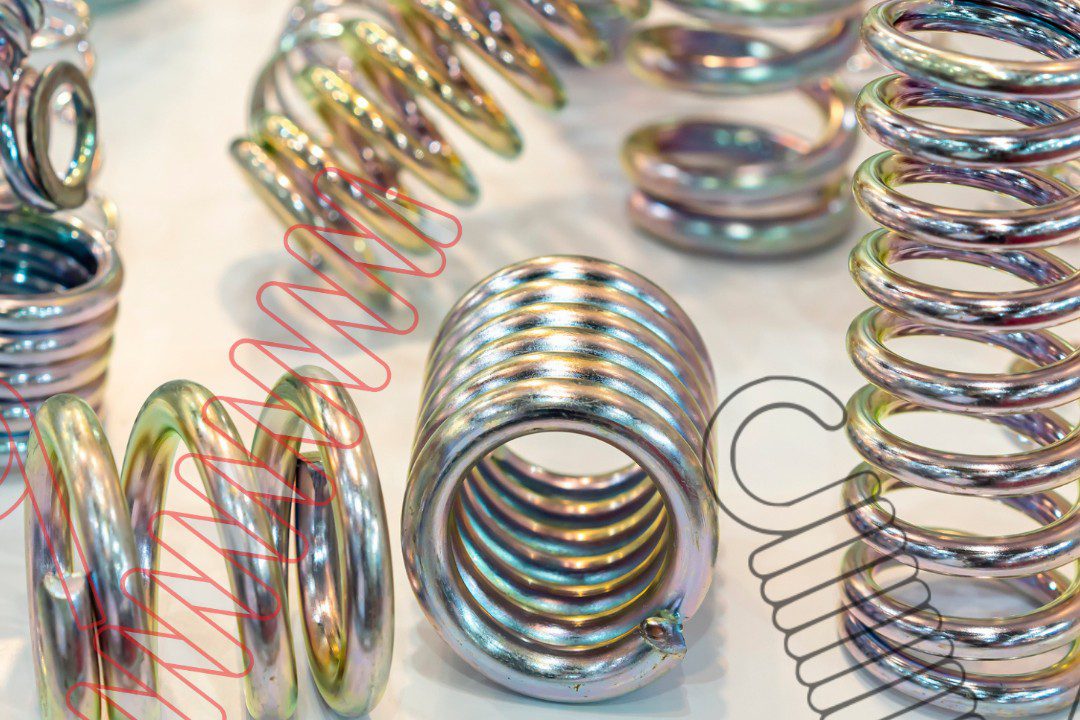
AEROSPACE SPRING VARIATIONS
Types of Aerospace Springs and Their Applications

Aerospace Compression Springs
Aerospace compression springs appear in control systems, valve mechanisms, locking assemblies, and actuator systems throughout an aircraft. A compression spring in a flight-critical system must deliver consistent load at defined lengths across thousands of cycles without exceeding the stress levels that would cause fatigue cracking.
Spring design for compression springs in aerospace applications requires careful analysis of stress at maximum deflection, solid height clearance, and buckling behavior for springs with high slenderness ratios. Our engineering team uses spring design software to model these parameters before production begins.
Explore our compression spring capabilities to see how we approach precision manufacture for demanding applications.

Aerospace Torsion Springs
Aerospace torsion springs are used in control surface mechanisms, door latches, access panel hinges, and instrument mechanisms throughout aircraft systems. Torsion springs deliver rotational force when deflected, making them the right choice for any mechanism that requires a spring-loaded return or resistance to angular displacement.
Torsion spring design for aerospace applications must account for the stress distribution across the coil body and at the leg bend points, where stress concentration is highest. For high-cycle aerospace applications, the geometry of the leg transition is designed carefully to keep stress within acceptable limits and maximize fatigue life.
Our torsion spring manufacturing capabilities support custom aerospace designs requiring exact specifications and full material traceability.

Extension Springs in Aerospace Systems
Extension springs are used in aerospace systems where tension and return force must be generated across a linear travel range. Cable tensioning systems, retraction mechanisms, and spring-loaded covers in aircraft cabins all rely on extension springs to provide controlled, consistent force.
For aerospace extension springs, initial tension, hook stress, and fatigue life at the hook are all engineering considerations that must be addressed during design. The hook geometry directly affects the stress concentration at the end of the coil, and poorly designed hooks are a common failure point in high-cycle applications.
See our extension spring capabilities for more information on how we manufacture extension springs to aerospace specifications.

Wire Forms and Custom Spring Components
Beyond traditional coil springs, wire forms serve as critical components in aerospace assemblies, functioning as retaining clips, guide elements, safety locks, and structural linkages. Our wire forms manufacturing capabilities apply the same material standards, tolerances, and quality documentation that govern our spring production.
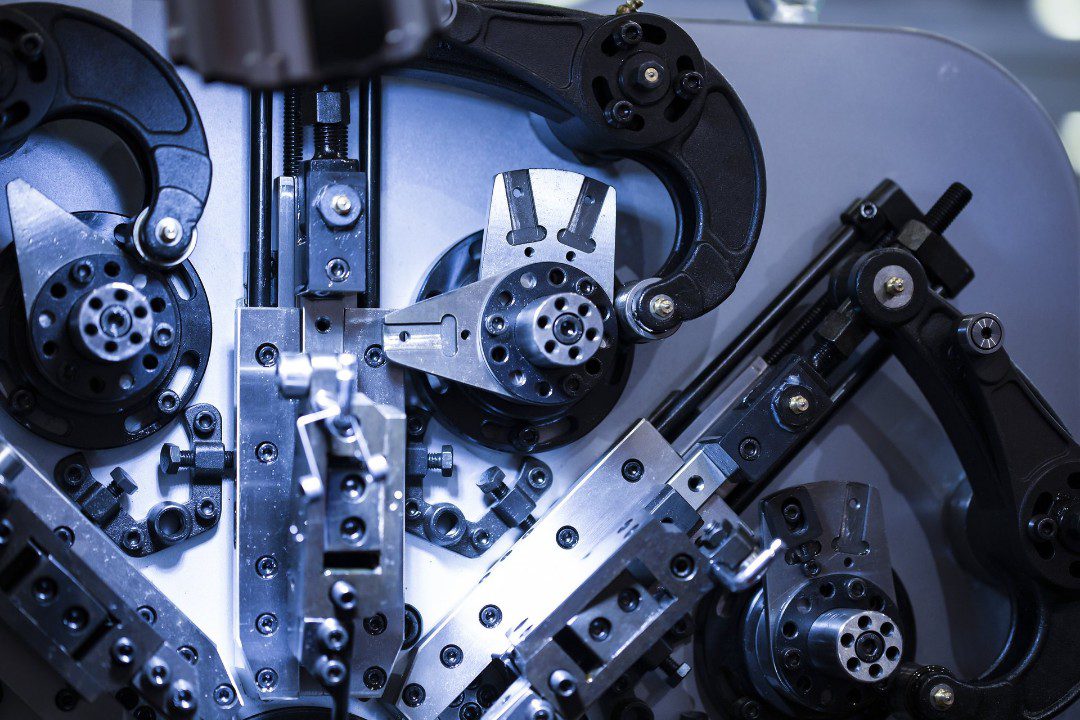
BALANCING PRECISION AND TOLERANCE
Why Standard Springs Fall Short in Aerospace Applications
Standard springs manufactured to general commercial tolerances are inadequate for aerospace applications. The tolerance stack-up in an aerospace assembly is calculated with the assumption that every component, including springs, will fall within a tightly defined range. Standard springs with commercial tolerances introduce variability that can cause assembly interference, inconsistent force output, or premature fatigue failure.
Custom aerospace springs are manufactured to exact specifications, with tolerances on wire diameter, coil diameter, free length, and load that are significantly tighter than commercial standards. Achieving and verifying these tolerances requires precision machinery, calibrated measurement equipment, and a quality system that documents every step.
Western Spring uses computerized force/length testers to verify load at defined lengths for every aerospace spring we produce. This level of testing ensures that the spring delivered to the customer matches the design intent of the specification.
Diameter Control and Coil Consistency
Diameter control is one of the most important aspects of precision aerospace spring manufacture. Outer diameter tolerance affects how the spring fits within its housing or over a mandrel. Variations in coil diameter along the length of a spring affect the load distribution and the contact pattern when the spring is compressed against its seats.
For high-precision aerospace springs, diameter is measured at multiple points along the coil to verify consistency. This level of inspection goes beyond what standard commercial spring inspection requires, but it is what aerospace reliability demands.
MAXIMIZING THE CAPACITY OF AEROSPACE SPRINGS
Fatigue Resistance and Dynamic Loading in Aerospace Applications
Fatigue is the primary failure mode for springs in high-cycle aerospace applications. Every time a spring is compressed, extended, or twisted, it accumulates fatigue damage at stress concentration points. The goal of aerospace spring design is to keep the operating stress range low enough that the spring achieves its required service life without fatigue cracking.
Shot peening improves fatigue resistance by introducing compressive surface stress. Material selection also plays a role, since alloys with higher fatigue strength allow higher operating stress levels for the same service life.
For springs used in flight control systems or other safety-critical mechanisms, fatigue life testing may be required as part of the qualification process. A sample population of springs is cycled to the required number of cycles at the design load range, and the results are documented to demonstrate compliance with the life requirement.
The Spring Manufacturers Institute provides technical resources on spring fatigue and design standards that inform engineering decisions for demanding applications like those found in the aerospace industry.

Landing Gear and Flight Control Spring Applications
Springs in Landing Gear Systems
Landing gear systems subject springs to some of the most demanding operating conditions in any aerospace application. Springs used in landing gear mechanisms must absorb the shock loads generated during landing, cycle reliably through thousands of landing and retraction sequences, and maintain their function across the full range of temperatures encountered at altitude and on the ground.
Landing gear springs must be designed for the specific load and deflection profile of the gear system, with fatigue life calculated to cover the expected number of cycles over the aircraft’s service life. Material selection and surface treatment are both chosen to resist the corrosive environment that landing gear systems operate in, including exposure to runway de-icing chemicals and hydraulic fluids.
Control Surfaces and Flight Control Mechanisms
Springs used in control surface mechanisms help maintain the position of ailerons, rudders, and elevators, provide return force in spring-loaded control systems, and support the pilot in managing control loads. The aileron mechanism in a light aircraft, for example, may use torsion springs or compression springs to provide stick return force and prevent control surface flutter.
Flight control spring applications require careful attention to force consistency, since a pilot relies on predictable control feedback to fly the aircraft safely. Springs that deliver inconsistent force due to manufacturing variability or fatigue degradation change the feel of the controls in ways that affect pilot performance and safety.
KEEPING AMERICA SAFE AND STRONG
Defense Applications and Military Spring Standards
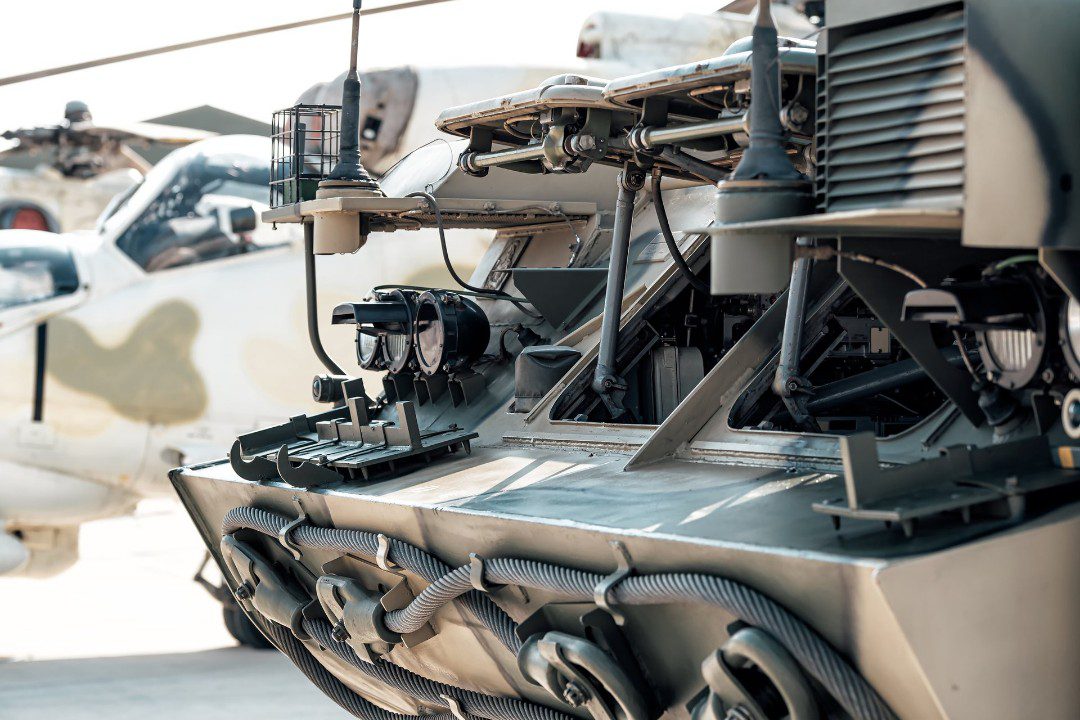
Defense applications impose some of the most stringent spring requirements found anywhere in the aerospace industry. Military systems must function across extreme temperature ranges, survive shock and vibration loads far beyond what commercial aircraft experience, and maintain reliability in austere environments without the maintenance access available in commercial aviation.
Custom springs for military and defense applications are often manufactured to military specifications that require certified raw material, lot traceability, first article inspection, and in some cases government source inspection. Western Spring’s quality management system is built to support these requirements.
From precision springs used in guidance systems to high-load springs in weapons mechanisms and satellite deployment systems, defense applications require engineering rigor and manufacturing discipline.
Aerospace Spring Testing and Certification
What Testing Covers in Aerospace Spring Qualification
Aerospace spring testing goes beyond the load verification testing performed on commercial springs. Depending on the application, qualification testing may include load testing at defined lengths, fatigue cycle testing, salt spray corrosion testing, high and low temperature exposure testing to verify performance across the operating temperature range, and dimensional inspection to verify all specification requirements.
Testing is performed on calibrated equipment with documented procedures, and results are retained as quality records. For flight-critical components, testing documentation becomes part of the aircraft’s airworthiness record and must be available for audit.
Engineering Support for Aerospace Spring Design
Western Spring provides engineering support to aerospace designers who are working through the spring design process. Our team uses advanced spring design software to model force output, stress levels, fatigue life, and dimensional parameters before committing to a production design. This front-end engineering collaboration reduces design cycle time and helps customers arrive at a validated specification with fewer iterations.
For aerospace programs where schedule and first-time quality are both critical, early engagement with your spring manufacturer is one of the most effective ways to reduce risk in the component supply chain.

INDUSTRY-LEADING CUSTOM SPRING MANUFACTURING
Partner With Western Spring Manufacturing
Western Spring Manufacturing has built its reputation on precision, reliability, and engineering depth across a wide range of demanding industries, including aerospace. We are members of the Spring Manufacturers Institute and hold ISO 9001:2015 certification, providing the quality management foundation that aerospace customers need.
Our manufacturing of custom aerospace springs includes compression springs, torsion springs, extension springs, die springs, and wire forms, all produced to the exact specifications your design requires. We support full material traceability, first article inspection, and the documentation requirements that aerospace and defense programs demand.
If your program requires high-quality springs built to aerospace standards with the engineering support and quality documentation to match, contact Western Spring Manufacturing to discuss your spring requirements.